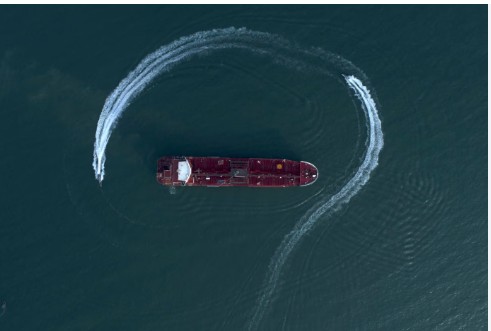
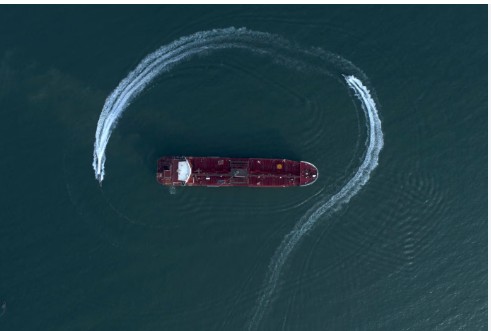
Recent developments in the Gulf region have brought US naval strategy and maritime enforcement practices into sharp focus, following unusual movements by oil tankers Rich Starry and Elpis.
With one vessel awaiting instructions and another halting near sensitive waters, the situation has triggered a broader debate on how sanctions enforcement and security operations are actually executed at sea.
Tanker Activity Raises Strategic Questions
The tanker Rich Starry has adopted a “for orders” status, indicating a pause in its journey as operators reassess the situation before committing to a destination. At the same time, Elpis has remained stationary after moving close to Iran.
These parallel developments have raised critical questions:
- How are enforcement decisions taken in real time?
- What role does the US Navy play in monitoring and intervention?
- Are responses guided by strict rules or broader geopolitical considerations?
Global Attention on US Maritime Posture
According to Bloomberg, such incidents are being closely tracked by governments, energy markets, and shipping companies worldwide, as they may influence future approaches to maritime security.
The Gulf region—particularly routes near the Strait of Hormuz—remains a strategic hotspot, where even minor shifts in tanker movement can carry outsized geopolitical significance.
Balancing Enforcement and Stability
Experts suggest that enforcing sanctions at sea involves a delicate balance between assertiveness and restraint.
Key considerations include:
- Avoiding escalation in already sensitive regions
- Maintaining uninterrupted global energy flows
- Coordinating with international partners and allies
This often leads to case-by-case decision-making, rather than uniform enforcement, adding to the perception of unpredictability.
Implications for Maritime Security Frameworks
The ongoing situation highlights potential gaps in the current system of maritime enforcement:
- Lack of transparent global standards
- Dependence on strategic discretion
- Challenges in monitoring rapidly changing vessel movements
As tankers like Rich Starry and Elpis remain in uncertain positions, the spotlight is firmly on how leading naval powers respond.
A Defining Moment for Future Policy
The episode could prove significant in shaping future US and global maritime strategies, particularly in relation to sanctions enforcement and security coordination.
With global stakeholders watching closely, these घटनाएँ may influence:
- Policy reforms in maritime governance
- Stronger international cooperation frameworks
- New approaches to balancing security with economic stability
For now, the unfolding developments serve as a reminder that naval strategy, commerce, and geopolitics remain deeply interconnected in today’s volatile global environment.
About the Author